FAQs

Are linear motors difficult to integrate into a machine?

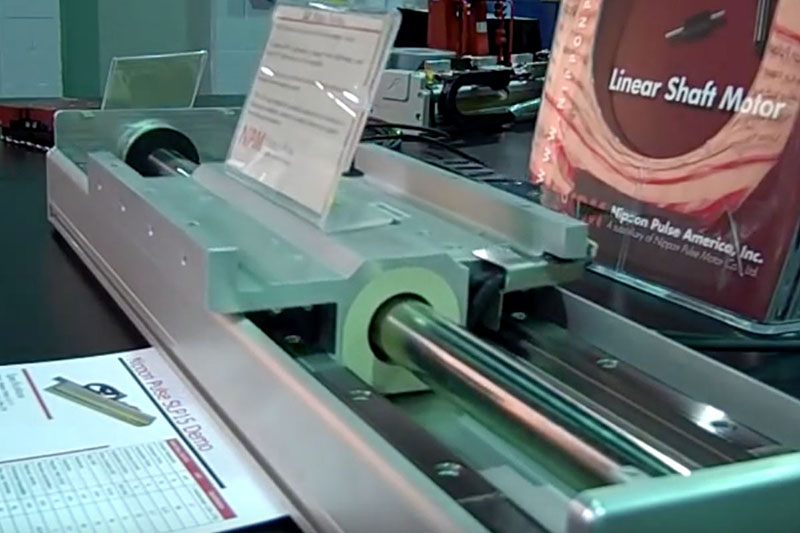
Not difficult, just a little different. The Linear Shaft Motor is simpler to install, as it replaces the ball screw, nut,
end bearings, motor mount, couplings, and rotary motor. Alignment of the Linear Shaft Motor is not critical (even
for high performance packages) and consists of mainly ensuring there is some clearance between the forcer
and shaft over the entire travel. Nippon Pulse will assist with selection of suitable components.

Are the wiring diagrams available for your motors?

NPM's stepper motors are available with either 2-coil Bipolar, or 4-coil unipolar windings. Bipolar motors have 4 leads, while unipolar motors have 6 leads. Additionally, some motors are designed with eight leads, so they may be connected in a variety of ways.

Connection Instructions

Fig 1a. PF/PFC/PFCL series (Tin-can type) Bipolar

Fig 1b. PF/PFC/PFCL series (Tin-can type) Unipolar

Fig 3a. PR series (Hybrid type) Bipolar

Fig 3a. PR series (Hybrid type) Bipolar

Are versions of the Linear Shaft Motor available for use in waterproof, vacuum or clean room environ

Yes, the Linear Shaft Motor can be built for a variety of operating environments. To determine if and which
Linear Shaft Motor is suitable for a specific application, an applications engineer must review the specifications.

Can a Linear Shaft Motor be mounted vertically?

Yes, a linear motor provides the same performance when mounted vertically or horizontally. However, it is
recommended that a vertically mounted Linear Shaft Motor be counterbalanced.

Can more than one forcer be used with a single shaft?

Yes, more than one forcer can be used in conjunction with a single shaft as long as the forcers do not
physically interfere with each other. Two forcers may also be tied together and driven with one drive two double
the output force.

Can the shaft of the Linear Shaft Motor transmit a rotary force?

Yes, it is possible. To determine which Linear Shaft Motor is most suitable for your specific application, an
applications engineer must review the specifications.

Do magnets ever lose their magnetism over time?

The Linear Shaft motors use a rare earth magnet, which will maintain their strength for 99 years. However,
when operating at high temperatures (>150°C), these rare earth magnets can lose strength. Lower
temperatures have no effect the magnets as long as frost does not form in the air gap.

Do standard rotary motor electronics work with linear motors?

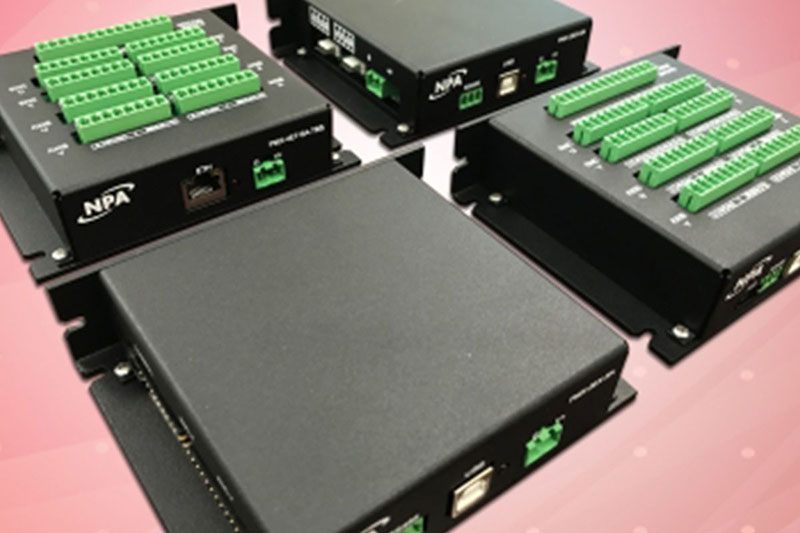
The Linear Shaft Motor is designed to operate with most off-the-shelf motor controls and drives.Basically, the
Linear Shaft Motor uses the same electric circuit as other linear motors and rotary servo motors.

Does only one forcer need to have the halls or do both need halls?

In an application where two coils are connected to the same drive, the same coil of each drive must be
above the same magnet in order to run. (See drawing below) This is why when the second forcer is flipped the
U and V leads must also be flipped. As such only one of the two coils needs to have halls.

How accurate are Linear Shaft Motors?

By eliminating the conversion of rotary to linear motion, a major source of positioning error is removed. This
results in high performance and accuracy. While the Linear Shaft Motor itself does not have inherent resolution,
position accuracy is ultimately determined by the linear encoder feedback accuracy and the core stuffiness of
the Linear Shaft motor. Testing has shown that with encoder resolutions less then 10nm, the Linear Shaft Motor
will, at worst case, enable a position accuracy of ±1.2 pulses of encoder resolution. This position accuracy is not
affected by the expansion and contraction of the shaft.

How can 4 wire, 6 wire and 8 wire motors be connected?

A 4 lead motor can only be connected to a Bipolar driver. The 6-lead and 8-lead motor can be connected to either a Unipolar driver and or a Bipolar driver. A wiring diagram shows the possible connections.

How can an encoder be used to determine position and speed?

An encoder will send output signals for decoding. These decoded signals will relay current speed, position, and will verify if a motor is missing steps. After comparing input pulses to output steps, corrections will be made.

How come I can run step motor drivers at higher voltages than what my step motor is rated?

Most hybrid motors current controlled driven (PMW/chopping drives) as opposed to voltage-based drives. If a motor is rated at 5V, the output current must be limited in order to keep the voltage across the coils under 5V. Stepper motors typically have a current label because they are usually current driven.

How do I calculate the number of teeth and the available step angle?

Nt = 360º / (S x Np )
or
S  = 360º / (Nt x Np )
Nt = Number of rotor teeth (must be an integer)
S  = Full step angle
Np = Number of mechanical phases (must be an integer)
      = Number of full steps to repeat the same mechanical line up
         between the stator tooth and the rotor tooth
Np = 4 for 2-phase bipolar motor
      = 10 for 5-phase bipolar motor
      = 3 for 3-phase unipolar motor

How do I check if my stepper motor has shorted or burned?

Use a multimeter to check the resistance of each phase. Check between Phase A and /A and then between B and /B. Check the data sheet provided to ensure there is no more than a 10% difference. This operation is necessary when too much current or voltage is applied to the motor.

How do step accuracy and micro-stepping relate to each other?

Step accuracy is inherent in a motor's mechanical design and is controlled by the torque stiffness. Microstepping increases the step resolution, but not the step accuracy. Micro-stepping a motor without good step accuracy will not provide the smoothest motion.

How fast can my stepper motor run?

Most hybrid stepper motors are able to operate around 2000rpm or less. Remember that in higher speed, the torque will be lower than when the motor is in a lower speed. Once you get into higher speeds with torque, servomotors are typically used.

How fast can the Linear Shaft Motor go?

While the Linear Shaft Motor itself does not have inherent speed limitations. There are several factors that
can limit the maximum speed of a Linear Shaft Motor system. The control must provide sufficient bus voltage to
support the speed requirements. The encoder itself must be able to respond to that speed and its output
frequency must be within the controllers capability: for example, with a 0.5 micron encoder and a speed of 5
m/s, the controller must handle 10MHz. Finally the speed rating of the stage’s bearing system must not be
exceeded: for example, in a recalculating ball bearing, the balls start to skid (rather than roll) at about 5 m/s.
Under the right conditions the Linear Shaft Motor can reach speeds exceeding 10 m/s.

How many steps per revolution does a 0.9, 1.8, 3.75, 7.5 and 15 degree motor have?

Steps per revolution equals 360° divided by step angle (0.9°, 1.8°, 3.75°, 7.5° and 15°).

  • 0.9° = 400 steps/rev
  • 7.5° = 48 steps/rev
  • 1.8° = 200 steps/rev
  • 15° = 24 steps/rev

These numbers are when the motors are driven in full-step excitation mode.

Should I worry about heat dissipation?

The current rating of a stepper motor is based on heat dissipation (Watt=I^2xR) of the motor. A larger motor dissipates more heat than a smaller motor. With the same phase resistance, a larger motor has a higher current rating than that of a smaller motor. A motor mounted in a good conductor will also result in more heat dissipation than that of one mounted on a non-conductor.

What are the advantages of the Linear Shaft Motor over a lead screw?

The advantages of the Linear Shaft Motor include higher velocities [>240 in/sec (>6 m/s)], non-wear moving
part, free movement when power is off, no backlash because there are no mechanical linkages, easer
alignments, and easier manufacturing.

What are the advantages of using stepper motors?

There are several advantages of using stepper motors. Speed can easily be determined and controlled by remembering speed equals steps per revolution divided by pulse rate. Stepper motors can also make fine incremental moves and do not require a feedback encoder (open loop). Stepper motors also have fast acceleration capability and have non-cumulative positioning error. Along with excellent low speed/high torque characteristics without gear reduction, stepper motors can also be used to hold loads in a stationary position without creating overheating. All stepper motors have the ability to operate on a wide speed range.

What does “Maximizing Torque at Desired Speed” mean?

To alter its characteristics of performance, the stepper motor can be wound with different amounts of coil. Depending on each customer’s torque need, NPA can customize windings at no additional charge.

What happens if the system loses power or velocity feedback?

If a power loss occurs, the system loses all stiffness. So, if the payload is moving, it will continue to move until
it hits a stop or until friction brings it to a stop. If the system is already stopped, it will not be affected. If the
feedback loop is lost, it may lead to a runaway situation. This condition can be avoided with the use of soft and
hard stops as well as braking systems.

What is a Linear Shaft Motor?

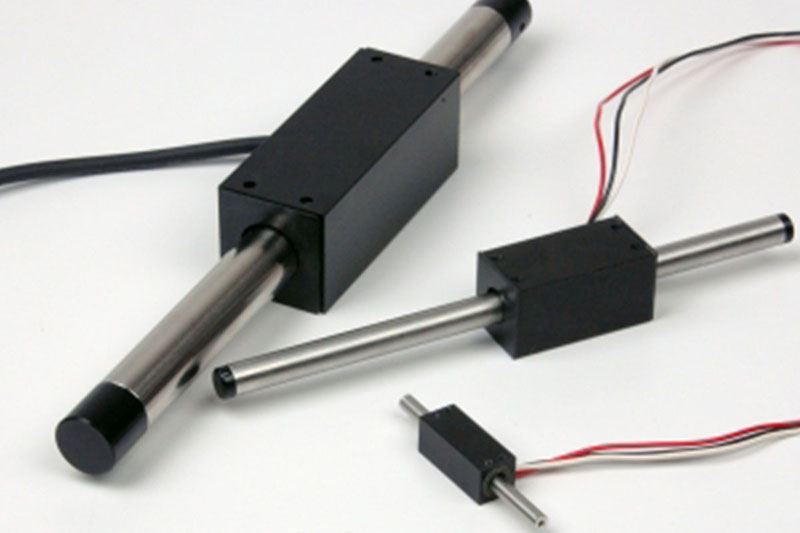
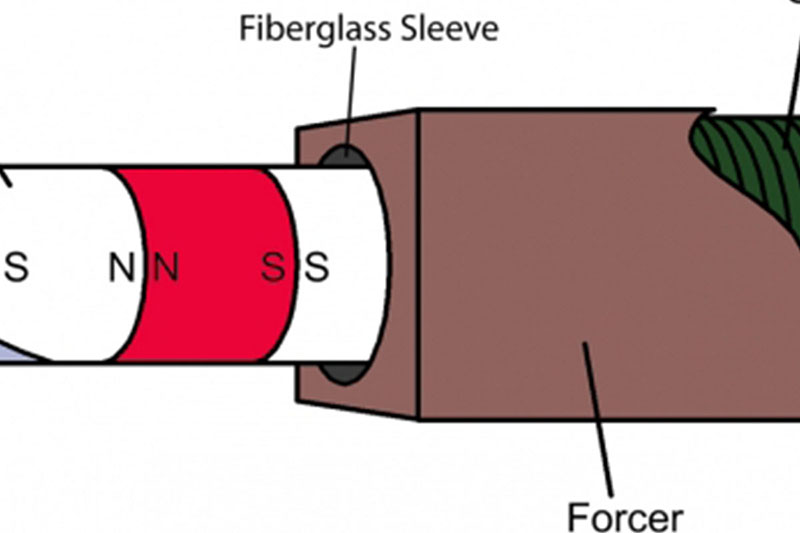
Linear Shaft Motors are direct drive linear servomotors that consist of a shaft with permanent magnets and a
forcer of cylindrically wound coils.

What is a Stepper Motor?

It is a motor that uses input pulses to take proportional steps. These motors can be used for positioning and/or speed control in various applications. To change phases, steppers require power and sequence circuits.

What is cogging?

Cogging is the tendency of some linear motors to move in discrete distances rather than infinitely variable
distances. The effect is a result of varying magnetic forces along the length of motor travel. This effect is most
often seen when ferrous material is used in the motor or stage construction.

What is micro-stepping?

Microstepping is used to increase a motor’s resolution. This is achieved by controlling the phase current ratio. Microstepping does not increase step accuracy, but will allow a motor to run with less noise and smoother. The degree of the improvement depends on the step accuracy of the motor.

What is motor power duty cycle for a linear motor?

Duty cycle for a linear motor is different then other types of systems. While it is defined as (time on) / (time on
+ time off) per cycle, in a linear motor the motor can be on even when not in motion. So for a linear motor the
duty cycle is based upon the time the motor is actually working (when current is applied) and NOT the % of time
the motor is moving! Thus it is best defined as:
Motion duty cycle is defined as time moving / total time. It is possible for Motor power duty to be 100% while the
motor is not moving, or the motion duty to 100% with very low motor power duty.

What is rated current? What is peak current?

The rated current is what the motor is rated at. The peak current refers to the amount of current the driver outputs.

Non-microstepping drivers
Peak Current = Rated Current

When using a driver that only does full stepping, the rated current is the same as the peak current. (Rated current = Peak Current).

Microstepping Drivers
Peak Current = 1.4 x Rated Current

When using a driver that is capable of doing microstepping (microstepping = 1/2, 1/4 stepping or more), the definition of peak current becomes 1.4 times the rated current. Microstepping drivers are made differently in order to maximize their ability to drive the stepper motor. Therefore, step motors can handle up to their rated current multiplied by 1.4. (Peak Current = 1.4 x Rated Current). This will not damage the motor because the power output is more or less the same.

What is RMS Current?

RMS is the average current flowing through the windings. RMS current for a given application should not
exceed the rated continuous current for the selected Linear Shaft Motor.

What is system resonance?

To determine a motor’s resonance, take the square root of (torque stiffness divided by total inertia). Although resonance frequency cannot be completed eliminated, it can be changed by altering the rotor or system inertia or by altering the torque stiffness.

What is the difference between “Half-Coil” and “Full-Coil”?

This refers to a six-lead motor (unipolar step motors) when a bipolar drive is being used to run the motors. Since bipolar motors only need four wires to run, there are options in connecting a six-lead wire to a bipolar drive. Typically, we refer to the six wires as A, /A, A Common, B, /B, B Common. Half-coil connection would be to use A, A Common, and B, B Common (or /A, A Common, and /B, B Common). To use full-coil, also known as series connection, you would use A, /A and B, /B. For full-coil the two common wires are ignored. The full-coil connection (or series) is ideal for lower speeds requiring more torque. The half-coil connection will give an overall amount of torque across a wider range of speeds.

What is the difference between Holding Torque and Pull Out Torque?

Holding torque is the maximum restoring torque developed by the rotor when one or more phases of the motor are energized. The output torque is also known as running or dynamic torque. Output torque varies at different speeds with different drivers and power input. In general, maximum output torque is 70% of the holding torque.

What is the difference between Mechanical Age and Electrical Angle?

Mechanical angle represents the step-angle of the motor. In using the full-step mode of a 1.8° motor, the mechanical angle is 1.8°. The electrical angle is 1/16th of the mechanical angle. Thus the electrical angle of a 1.8° motor is 0.1125°.

What is the difference between the PF and the PFC?

The PFC has the connector already attached by machine only available from our factory in Japan. In our Virginia facility we can only produce the PF.

PF
  • PF = Flying lead joint type
  • Manual lead lead-wires assembly
  • Can be built in the model shop in VA
PFC
  • PFC = Connector joint type
  • Automatic motor lead lead-wires assembly
  • Only built in Japan
What is the difference between Unipolar and Bipolar?

Unipolar (4 coils/6 lead wires) - The unipolar driver’s output current direction cannot be changed. There are two sets of coils for each phase in a motor. Only one set of the coils can be energized at a time. Each coil represents one phase; therefore, only 50% of the winding is utilized in the unipolar drive. The number of mechanical phases equals the number of electrical phases. Due to the fact unipolar drivers only use 50% of the windings, the performance ranges from low to moderate. The benefit of this is that it doesn’t generate too much heat.

Bipolar (2coils/4 lead wires) - The bipolar driver’s output current direction can be changed. 100% of the winding is utilized in the bipolar drive. That means the two sets of the coils in each phase can be connected either in series or in parallel to become one set of a coil. Current direction changed from the driver creates another mechanical phase. The number of mechanical phases is always twice the number of electrical phases. Bipolar drivers provide 40% more holding torque than unipolar drivers, but typically run at higher temperatures. For this reason, proper heat dissipation is important with bipolar drivers.

What is the minimum number of steps to get the best step accuracy?

When running in Full Step, run the motor in increments of 4 steps. This way, the motor will end in the ‘A’ position every time, which is the rotor’s natural position.

What is the MTBF (Mean Time Between Failure) for the Linear Shaft Motor?

The current published MTBF for the Linear Shaft motor is over 100,000 hours of operation.

What is the price of a typical Linear Shaft Motor system?

The price of the Linear Shaft Motor is comparable to other ironless core linear motors. Prices for other parts
of the system are dependent upon the resolution and size of the system being produced.

What is the reliability of the Linear Shaft Motor?

The Linear Shaft Motor is a non-contact device. As such, it does not have any parts that can wear out. If the
system is designed properly, and the operating parameter limits are not exceeded, a Linear Shaft Motor should
last indefinitely.

What performance improvements can be expected when using the Linear Shaft Motor?

 In most applications, repeatability and accuracy will be increased. Move times and settling time will be
decreased. Noise will also decrease as well as total power requirements.

What routine maintenance is required for Linear Shaft Motors?

The Linear Shaft Motor itself is entirely maintenance free. It does not have any parts that can wear out. NPA
does recommend that you perform periodic minimal inspections. Please see the Maintenance and Service
section of the Installation and Users Guide for a full list.

What voltage should I use?

In order to get the maximum speed from a motor, torque must be maximized at the operating speed, making the correct operating speed vital. If the operating speed of a hybrid motor is 1000pps or greater, using a power supply of less than 12V is not advised. A power supply of over 24V is necessary if the operating speed is greater than 4000pps.

Which drive is better, L/R Drives or Voltage Drives?

When using a hybrid motor, NPA does not recommend using either a L/R or voltage drive. These drives, which provide constant voltage, create heat during operation and as a result will increase the motor’s resistance. Any change to the motor’s resistance will change the current supplied. NPA recommends using a constant current drive, such as PWM/chopper drive, for all applications with hybrid motors. When using tin-can motors, these limits do not apply.

Will the Linear Shaft Motor produce enough force for my application?

The smallest Linear Shaft Motor will produce 0.29N [0.07 lbs] of continuous force. The largest can provide
36,000N [8180 lbs] of peak force.

Will the step motor heat up if it stalls?

No. A stepper motor does not draw any increased current when in a stalled position.